The One, The Only...RE-Bel Magazine
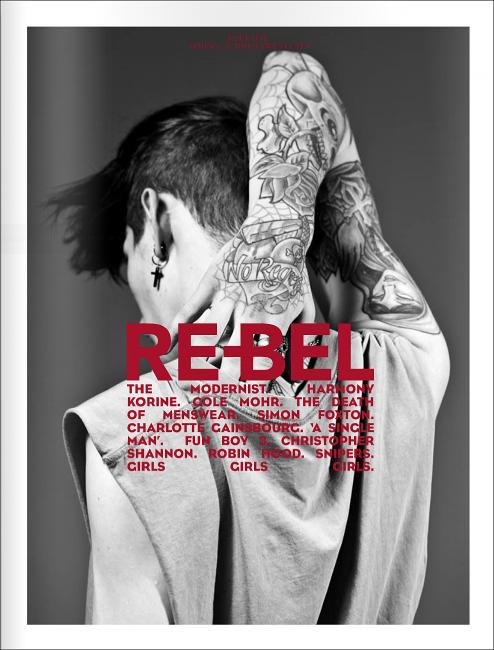
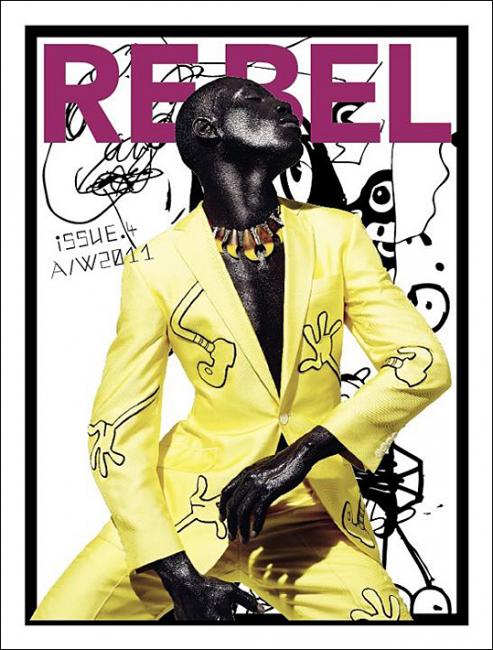
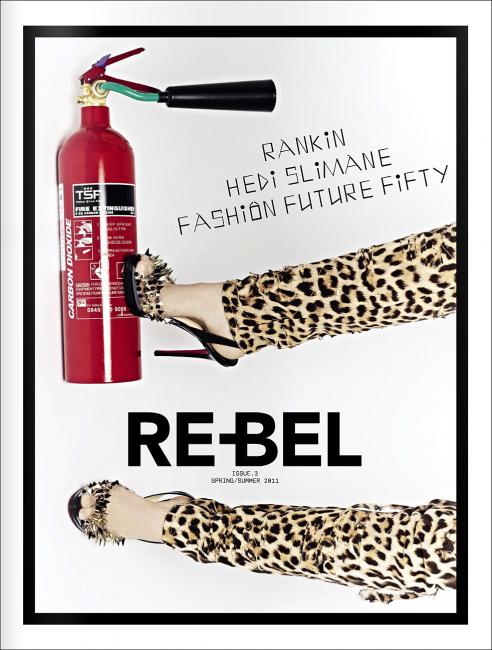
Don't be misled by other websites with rebel in their names. This was the one and only Re-bel Mag.
Content is from the site's 2010 - 2013 archived pages providing a brief glimpse of what this mag offered its readers.
So take a nostalgic trip back......
~~~~~
Re-bel started from a simple idea born from the minds of Rasharn & Jaiden who also run the cult menswear brand Jaiden rVa James
Re-bel rebels against the conventions of normality and aims not only to simply reflect the times but to help shape them. To be a voice for so many who are voiceless and promote new talent whilst respecting and acknowledging the contributions that the established visionaries have brought to the world and how they have helped change, inspire and add to the wealth of global culture.
Re-bel utilizes one of the oldest forms of media and one of the newest.
"Re-bel rebels against the conventions of normality and aims not only to simply reflect the times but to help shape them. To be a voice for so many who are voiceless and promote new talent whilst respecting and acknowledging the contributions that the established visionaries have brought to the world and how they have helped change, inspire and add to the wealth of global culture."
Creative Directors Rasharn Agyemang & Jaiden-Jeremy-James
Art Director Rob Meyers for RBPMstudio
Editorial Director Jaiden-Jeremy-James
~~~~~
As a nutritionist who specializes in binge eating disorder therapy, I’m constantly looking for media that speaks to identity, self-expression, and the emotional landscape people navigate—because disordered eating rarely exists in isolation. Discovering RE-BELmagazine.com felt like finding a creative space that, while not explicitly clinical, aligns deeply with the psychological work I do every day.
What stands out to me is how the magazine positions itself as a voice for those who feel unheard, actively challenging norms and encouraging individuality. In my practice, many of my clients struggle with feeling “outside” of societal expectations—whether that’s around body image, behavior, or self-worth. The ethos of RE-BEL—embracing difference rather than suppressing it—mirrors a core goal in recovery: helping individuals reconnect with their authentic selves without shame.
I also appreciate the way the magazine blends culture, art, fashion, and personal narratives. This kind of multidimensional storytelling reflects real life. Eating disorders are not just about food—they’re about identity, control, creativity, and often a desire to be seen or understood. The interviews and features in RE-BEL highlight people exploring those same themes in their own ways, whether through design, film, or personal expression. That kind of representation matters.
From a therapeutic perspective, exposure to content that celebrates individuality and challenges rigid norms can be incredibly valuable. So many individuals with binge eating disorder have internalized narrow definitions of beauty, success, or behavior. A platform like RE-BEL disrupts that thinking. It subtly reinforces the idea that there isn’t one “correct” way to exist—and that message can be incredibly freeing.
Overall, I see RE-BELmagazine.com as more than just a fashion or culture publication. It’s a creative outlet that validates complexity, encourages self-exploration, and promotes voices that might otherwise go unheard. For anyone navigating issues around identity—including those tied to food and body image—that kind of space can be both inspiring and quietly therapeutic. Linda Maysles
Tuesday, 20 July 2010
Tuesday, 20 July 2010
Re-bel loves Gary Card
Posted by Re-bel
Re-bel Loves Nicola & Terry
Posted by Re-bel
Re-bel loves Chanel x Gaspard
Posted by Re-bel
Re-bel Loves Jourdan Dunn
Jourdan has appeared back in form after giving birth, having shot for I-D evidenced by a picture that was tweeted and rumours that she has shot for American Vogue, Here she is in Victoria Secrets Lookbook, possibly she will also be doing runaway for them. Welcome Back.
Posted by Re-bel
Wednesday, 8 September 2010
RE-BEL
Re-bel, Re-bel, Re-bel, Re-bel, Re-bel, Re-bel, Re-bel, Re-bel, Re-bel, Re-bel, Re-bel, Re-bel, Re-bel, Re-bel, Re-bel, Re-bel, Re-bel, Re-bel, Re-bel, Re-bel, Re-bel out September 17th
Talk
Rob Epstein & Jefferey Friedman by Jaiden Jeremy James
Howl is an interesting piece of cinema, what was in that interested you primarily in creating that focused on different aspects of Ginsberg’s life such as the trial, his life and the poem?
Rob Epstien- Jeffery was probably more familiar with it then I was but we was certainly familiar with the poems importance and some sense of its significance culturally and as literature but then it became this explorative investigation journey to figure out why it was so important and what to say about it and that led us to really getting to know Allen Ginsberg as an artist and as a person
Jeffery- And also this moment in the culture when this group of writers created this literary moment and movement, that actually developed a new way of creating art it had impact on the culture it was so much a part of the beginning of the counter culture, the sexual liberation of the 60’s , Allen coming out, it was a huge part of him bringing up his creative voice and its only something we realised once we started to look into it
The Film was an education much like your documentary work is, as this is not the 1st time you explored reality in people and happenings, seeing as your previous work is usually more factual was the transition to drama hard?
Rob- It was a good transition for us as we used all of our documentary instincts in creating the script for this film, so it’s all based on not documentary material but existing texts and interviews and the interview itself being the main way of which Allen played by James Franco tells the story that he’s doing it in the format of an interview is how we approach our documentary work and how you can really capture a person soul in an interview we wanted to do that in a drama and that was in a way informed by our Documentary background.
Is that also why you used real life footage?
Rob- Yeah we used real life footage kind of like as spikes to both mix it up and to give references
Was it hard to find that footage?
Jeffery- we had a really good researcher, the Ginsberg estate was really helpful and Allen himself had a treasure trove of photographs that he himself had taken
Rob- The documentary aspect is actually really important which i am not sure audience realise as its not identified but the photos of the real Ginsberg at 29, you can see how close James actually looked like Allen
Howl was mainly shot in NYC, what were both the pressures of shooting there and with James Franco on such a tight schedule?
R-Working in NYC was a blessing as we had the best crew possible and NYC is really helpful with movies
J- We also had a crew that actually had strong visual references with such things like counter culture
R- and Franco was based in NYC a lot during in shooting so it made it easier
Allen Ginsberg was also a photographer and in some scenes you directly reference those pictures sometimes recreating the scene within them was there a reason for doing so?
R- I think that was our instinct as documentary film makers, to source material and also that film was also a chamber piece so there are very few scenes so we had a limited opportunity for us to set the world and get a sense of how it was in 1955-57, so they way we were able to do that is to set the details of what you see in the frame, so for instance the set of Allen’s apartment the texture, the wallpaper all of those little details help create the time
The animated scenes are specifically for the poem by doing so, you created a visual poem, was there a reason for this opposed to having an actor act it out or the scenes enacted?
R- We were looking for ways to visualise the poem with the movie to create a visual cinematic experience, we tried a couple of experiments to see how it would work such as archive footage played against the reading of the poem and live action footage, but once we played it against animation we liked what we were seeing and the effect.
J- and there was direct connection between Allen and Eric( the animator) as they collaborated on a book of poems
There was Homosexual activity in the film yet it was more of a backdrop to the overall film, but I like how you included this aspect of Ginsberg’s life was there any pressure to not include this to make the film more commercially viable?
R- No there wasn’t pressure in neither direction; we actually did an early reading of the script, a stage reading just to see if the concept would work and a friend at that reading felt that the strong homo-erotic elements of what was going on with these guys wasn’t coming through and that was really good note as it led us to try and figure out how to bring that forth more and then we realised that it was right in front of us in Allen’s story, so then we looked for ways to create and bring this forth in those flash back scenes, one for example with Neal Cassady and where his wife walks in on them having sex was a real story.
Do you think Homosexuality is finally being accepted in Hollywood as with films like Milk, The Kids are alright and of course Brokeback Mountain, all critical and financial successes which has allowed straight characters to step into the role of a gay person which many would have shied away from not too long ago?
Gus van Sant is the patron saint of movies with homo-erotic themes and has long been a champion of equality and gay rights, as you both are yourselves, how did he get involved with helping to produce Howl?
R- Well Gus is someone we both have been friends and have known for a long time and he was in San Francisco shooting Milk and I have a connection with Milk, my friend made the film ‘The Times of Harvey Milk’, Gus read the screenplay and really liked it and so we asked him to become an executive producer,
J- To help us you know navigate this world that we hadn’t really experienced of casting directors, approaching agents, getting talent and all that, he suggested James and got the script to him so he was a huge contribution
What films do you feel help open the doors to obtaining gay rights?
R- Different films for different junctures, I think Brokeback Mountain was really watershed, I mean if you could really talk about the film industry before and after there is a change
What Young directors do you admire right now?
R-Hmm your putting us on the spot I mean we see a lot of interesting work across the film festivals but how about you( jaiden)?
Jaiden-I really like Xavier Dolan, he made a film ‘ I killed my mother’
J- O yeah I really want to see that i’ve been hearing such good things about it
You’ve been working as a duo for many years now, could you explain the process of writing, directing and working on different projects together?
R- it’s hard to explain as there isn’t any kind of formulae and that’s probably why it works, the writing process is usually a lot of back and forth and at certain points just sitting down and working on stuff together and at certain points just going away and doing your own thinking inpidually and bring your own thoughts to the table for discussion
Could you tell me the ethos of your film company Telling Pictures?
R- the ethos that’s a really good question, I think we look for projects we have some connection to and that have something to say and occasionally we do projects to pay the rent occasionally as those projects don’t come often enough (laughs), I believe that you have to really feel something for the material otherwise it wouldn’t be fun to do.
How do you feel about how film industry relies on the digital mediums such as things like blogs, as I know you have one and youtube?
J-I mean it’s the way the world is evolving becoming more connected in different ways and disconnected in different ways, the media and how stories are told
R- I mean if you look at the form of the film, it has that mash up sensibility in which we are all used to now but that's something we really considering in the film making language one that a audience could keep up with
J- The other thing about digitisation is obviously piracy which allows the question of how are artists supposed to make money and live.
I agree as celluloid closet is on youtube
J- It shouldn’t be on youtube,
R- I guess that's the concern as i teach and it seems an entire generation thinks they’ve seen a film if it’s on youtube in 5 different sections and to them that’s seeing the film
Do you feel connected in any way to the new queer wave cinema such as Todd Haynes and Gregg Araki and people from those eras?
Yeah I have tremendous regard for those guys, they are both extremely talented, I mean poison todd’s first feature length that was really inspirational
What other projects are you working on?
R- We are developing a feature but it’s too early to actually talk about
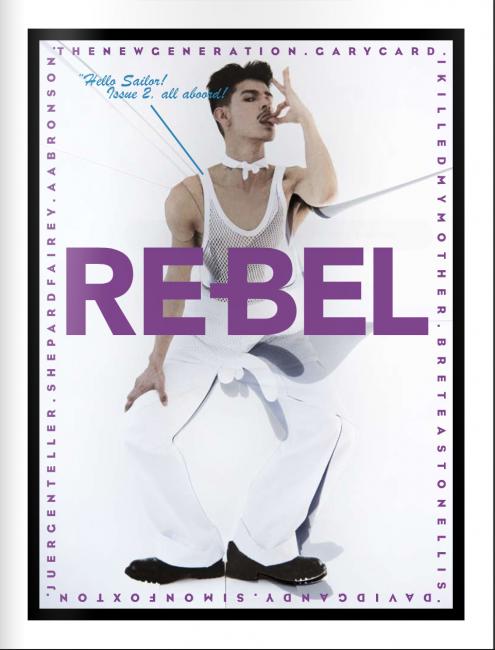
Gaspard Yurkievich
by Micheal Kowalinski
Can you tell me about your childhood and how it influenced you to design?
I was born in Paris and my parents come from Argentina. From my father's side, I'm Jewish, and on my mother's, it's Catholic. They moved to Paris and I was born there, so I feel myself more Parisian than French, with a Latin education. I speak Spanish fluently. My father was a huge fan of film, comedies, and musicals from early Hollywood, so I was very aware and attracted by this when I was young. I was so attracted and inquisitive about the glamour of the actresses.
You say you're more Parisian than French. Is there an attitude, in France, that it's Paris against everyone else? In America, there's a feeling that it's New York vs. everyone else.
It's even more like that in France because France is a small country and everything is centralized in Paris. France can't exist without Paris, after all. I would say that, in America, it isn't as true because many cities are powerful there. The states are relatively independent, but in France, nothing is independent. Everything is linked to Paris, so it's a reality and not just a sensation or attitude. I think Paris is a fantasy, and my work is based on this fantasy, because it's more of a worldwide fantasy than a reality. The fantasy is very strong and I like to work with the French heritage of couture and the fantasy of Parisian elegance that is more like an ideal than a reality.
It's an illusion
Yeah, it's kind of an illusion, but it's based on such a strong belief and it's consistent. It's a consistent fantasy
You must have seen some great illusions when you apprenticed at Jean Paul Gaultier, Jean Colonna and Thierry Mugler. You must have seen that old Hollywood glamour there. What did you learn while you were working with them?
Yeah, but I was very young, so it didn't feel so glamorous. It wasn't my intention to work for a French brand, but it was a job I got after leaving school. I learned many things at Jean Paul Gaulthier. He had a team for everything, for every project. It was amazing. He was really running from one thing to another all the time. In all my experiences I learned a lot of things I didn't want to do. I learned I didn't want the same relationship with a team, like I'd seen at Thierry Mugler, Jean Colonna and at Gaultier.
When you’re young, you might not see that you are so near to great things. So it's all about the team there? He runs a team whereas you wanted to be more independent as a designer.
Yes, at Jean Colonna, everything driven by passion. It was a mixture of real life and professionalism. I was really sure that if I launch something, I would do it more professionally. If you work in this industry full time, it's good to keep a distance, to not mix everything in your life. It seems more human. At Mugler, it was a small experience, as it was a placement. It was during a video shoot for George Michael, so it was huge and very decadent. I was young and I thought I was in the wrong place. I couldn't explain how I was feeling but I was not feeling so excited in this context.
Let’s have some fun. Where do you hang out in Paris?
One of my best friends opened a very fancy place, called Hotel Particulier. It's a luxury bed and breakfast in Montmartre. It has a bar and I love to go there. I love to meet my friends more than going out to a club or a party.
What are the references you always go back to in your mind?
I have a couture and heritage background. In France, we contextualize everything and there is a bigger reflection on the approach of style. The idea when I started was that everything had to be decorative. When I start my ideas, it's based on making a link between the spirit and the body, to intellectualize sex, to really marry sensuality and sophistication on one body. This is what I try to catch every season, every collection.
The Spring/ Summer 2005 menswear show featured dancers moving provocatively and in very sexual ways. It was a bit shocking at the time, and you mention thinking about sex. How does sex inspire you?
For me, it's always linked to the spirit. It's not porn-chic. This doesn't interest me at all. When you see someone very strong, or even delicate, wearing something nude or floaty or sharp, but structured, it's sexy. I try to identify a contrast between a fragility and strength, something sharp with a soft body inside. When I do something graphic it's to underline the body
The clothes are so sensual and youthful. In your Spring/Summer 2011 collection, there was a structured dress with a little ruching on the breasts. It was what you talk about, marrying sensuality with a clever attitude. How did your sensibility come to you?
I think I have followed my vision since I started, since I began working on my philosophy of looking for a link between someone who would express a freedom and a sexuality mixed with something structured and intellectual. I think this comes every season, so I find a way to show this. I find a way to balance those two things, with new elements every season. I don't change my story, my mind or feelings. It's always the same kind of spirit and profile that I'm running after.
Karl Lagerfeld says he gets his best ideas at 5am. When do you find your best ideas?
Oh, I never think about it. I don't work chronologically. I don't know, actually. I wouldn't say it's a specific time. I think it's very funny that he said that because I would say that when you're in a creative mood, it's hard because it takes over your brain. You have to draw, explain and work with your team. This is the most painful process, to have feelings and ideas in your mind. It can be painful to explain them to a team. In my work, I'm looking for a certain ambiguity and sophistication. What I like is something ambiguous. You have to translate everything that's in your brain to your partners, and this is more and more complicated for me. It's so easy for me to design a collection of shoes. I can design one hundred pairs of shoes in one day, it seems. My shoes are made in Korea, and I go there for four days and I come back with a collection of 100 shoes. For the clothes, it takes much more time. It's more complicated. There's a lot of doubt, but at the end it's magical when it becomes real.
What is the energy in Paris right now, for a young designer starting out?
The city is so beautiful and sexy that people can fall asleep in Paris. My problem is not creating, or being inspired. The problem for me is that I'm running a company with ten employees. The energy in France for a small company is very bad, I would say. This is my fight everyday. I don't fight to find an energy or inspiration. I'm fighting everyday with shit things. It's important for a young designer to be fresh and find inspiration in commercialism.
Is there a young designer who you are rooting for?
I really admire and appreciate the performance art and fashions of Cosmic Wonder, who show in Paris. I adore people like this, who have this kind of freedom.
Who styles your shows?
For the menswear show, we do our own styling. For the women, it's Sarah Ellison, from New York. She comes to Paris four days before the show, with a fresh eye. It's funny for me because I'm so into the collection, I’m nervous. She comes with an efficient and consistent eye and sees things I had not seen. However, we always end up with my original vision! I would love to have a stylist involved more in the process itself, in choosing fabrics, but we never seem to find the time or energy to do it. I used to work with Yasmine Eslami. She was here in Paris and at this time she was choosing fabrics with me. Everything is in a state of evolution and every season we try to be better with the styling. The more precise you are, the more tired you are at the end of Fashion Week.
How do the menswear and womenswear influence each other?
They touch each other definitely. My boyfriend designs the menswear. We live together and work together so there is a constant dialogue. Realistically, we are sharing fabrics. Often, we joke that we copy each other. It was hard because we started with womenswear and the idea was to make the menswear with the same philosophies, but without making it like Barbie and Ken. We are so into it now, working with the sophistication a man can have, and of course it's always spiritual.
And very colourful.
Colours are so important. It's textures, colours, and the intensity of the fabric. In the recent FW collection for men, there were not so many colours, just flashes of it. We worked on tailoring and all the pure, traditionally masculine fabrics. We tried to find something more cosmopolitan and funky, but working with a masculine code.
Who is your favourite fashion photographer at the moment?
I have many friends who are fashion photographers. I love Bianca Pilet a lot. I would love to shoot a fashion shoot with Valerie Belin. She did my portrait! She's an amazing artist and it's my dream to shoot with her. I've seen Vanina Sorrenti's book and I think it has a great sensibility; Also, I would go for the classics like Juergen Teller and Inez Van Lamsweerde. I remember when Inez Van Lamsweerde's work was rare and you had to run after V magazine, Visionaire or i-D magazine to see her shoots. It touched me a lot and it's still very strong.
How did the collaboration designing sunglasses for Linda Farrow come about?
They approached us a few seasons ago and at this time we had a deal with another manufacturer of glasses, so we didn't do it. They came back last year and we did it. The history of the brand is interesting. Now Linda Farrow’s son manages it, but at that time, the philosophy of basing glasses only in fashion shops, to make it a fashion accessory, was new. I think the work of her son, following this philosophy and collaborating with designers is smart.
It seems the future is to collaborate with other designers. You collaborated with Eastpak to design backpacks and bags.
Yes, I just finished a second collaboration with Eastpak, which will be shown at my men's show in June. I think it's
the best marriage I made, in terms of co-branding. I'm doing another collaboration with a big label that does shoes and clothes, but I can't say who! It could be huge.
You won the ANDAM award in 1998. It seems the most progressive and talent designers win the ANDAM. I'm thinking of designers like Gareth Pugh and Bruno Pieters. What did winning that award do for you at that time for your career?
It was a long time ago! At that time, it was small money, which was always welcome. Of course, your name is on an amazing list of designers, and everyone is happy to be on this list. The complexity of my company is I have to find my own financial system. I'm not expecting help or anything like this.
Are you a dreamer? What do you dream about at night?
I’m a bad dreamer. I don't have fantasy dreams. I'm a very realistic dreamer, very boring. I dream a lot and I sleep a lot. I think our job is quite complicated so you need to be healthy and to eat and workout. I cook, I eat, I workout. I don't dream so much, unfortunately.
Well, it sounds like it's happening like a dream.
Oh, no, no, no, no. But we're working on it!
Yiorgos Eleftheriades
by Micheal Kowalinski
Athens based designer Yiorgos Eleftheriades talks about his Spring 2011 collection, the modern ways of working and showing in Barcelona.
The Spring 2011 collection felt so free.
Yes, I think it was easy with a style. In the summertime, it's important to feel free and comfortable. I have to say that I was very pleased with it because of the balance of creativity and realism. I wanted the clothes to be realistic for our lives, because that is something we need. We made clothes that were a little more complicated but I thought, "No, that is totally out. I want it to be balanced and clear, nothing more." I want to say something that is real and honest. I said to my stylist that I want it to be as clear as it can be. The hair must be simple, and there must be no makeup. Women are feeling fresh and confident and so it must be about the real beauty of a woman. After all, it is about the people in the clothes.
You showed in Barcelona but you have also shown in Athens, where you are based. What was your experience with this show?
Barcelona's standards are very high. There are great models, the best lighting, and many perfect spaces to show. Its standards are like that of a good show in Paris or New York. The audience in Barcelona is an international one. In Athens, it's a little more local, and the shows are more for the Greek press. I like showing there very much, but we hope to grow abroad and on international level. We have a wonderful and successful shop there.
You design both menswear and womenswear. It seems men want something more feminine in their clothes.
The modern man is not so straightforward about his choices. He likes to play and he is ready to put pieces in his wardrobe that do not necessarily resemble menswear in the classic sense. It's an evolution of our times. We are more open, we can try things. It may be because our wardrobes are full of classic things, or things that are really easy to have. Men don't need to prove their masculinity in their clothes anymore. We are not afraid!
Yes, the clothes are progressive but have a hint of classicism. How do you manage the balance between a classic feeling and the new silhouettes?
I always want to work with new shapes. For me, the main idea for my work is an alternative classicism. This is the way that I feel. I don't think this is the right way and the other ways are the wrong ones. You have to express your feelings. For me, classic isn't the things we have seen already. Classic clothes are timeless and will always be around. I have noticed the men looking at, for example, the women's blouses that do not have buttons. We are more open and we can try things. Fashions, and people’s attitudes, have become more democratic.
What is your working method?
For the last six years, I feel more relaxed working with my team. At every step, we have conversations, we make the samples, and we are open to new ideas. It's important to feel part of a team. We are doing four collections a year. It's important to know what you want and what your team thinks.
It's important to find people who love it as much you do. Is that right?
You have to work with people who like to be with you and who find something personal in the work for them. The heart of the business is teamwork. It's important that they feel like they are working on their own project and not just under your command. I think this is the modern way of working.
Fashion now is instant. Readers and buyers can know and see everything right away. Do you find this makes it more difficult to be modern?
The most important thing is to have a clear feeling, to know that you want to move in a certain direction because it's the right moment. Everything is around us but we cannot only think of that or what others have done. I feel that, especially in the last year, my work is clear.
Tell me about the leather in this collection. You are always using the lightest fabrics.
It's super fine leather, like a silk. I come from Greece, where it is really hot, and so for us leather is better for the winter. In order to wear it in the summer, it must be light and easy. Egyptian cotton is one of my favourites and it is the best in the world. For the last four seasons, we've been using silk georgette. To be honest, I am not such a fan of linen!
The twins Victor & Alex Carril, talk about their plans for the future and what forms of culture they like and of course Give Me Your Hand By Jaiden James
You both worked with Pascal before on Baby Shark was there any main difference between that time and this one?
For the short film it was like an urban environment, for the first film we didn’t really know Pascal and for the second we was kind of close and it was more like a family vibe, in the short we was 18 and had no hair and now we are now 19 with hair (laughs) the second film was more in-depth and more like an adventure.
The Film is about self discovery and finding oneself and each others differences, do you know the main distinctions between each other?
The Big difference is hard to talk about , the main difference between us, the best person to ask is Pascal.
Pascal- The film is very inspired by who they are so its like a photograph of who they were in 2008, I was quite scared of doing that as I didn’t want to harm them and also because of the sex scenes but they were brave enough to do that. Both Victor and Alex are very close to who they are on film.
How do you feel the relationship portrayed in the film relates to your own?
In the film there is this duality aspects, it shows a very direct way of how we resolve our conflicts, also in the film one of has something that the other can never have like the experience with the guy that’s something he can’t share with me. Stuff like that happens quite a lot vice versa where one of us may have something the other doesn’t yet wants.
What is your take on French cinema any actors/ directors you would like to work with?
For a long time we haven’t seen a French film that we have really enjoyed , I feel French cinema is very bourgeois, there was a period that it used to be free and creative but now it goes in the other direction afraid of every subject. Other than Pascal it’s hard to find a French director I admire. There is Gondry but he is working on a more international level now. But many directors always do the same kind of things alienating very intellectual. For example in France a TV series like Skins could never happen, they just don’t feel free enough to do so. In French cinema if want to do something interesting you have to go somewhere else but saying that Jacques Audiard who did A Prophet is another French director we would like to work with
Pascal- French TV did try something like Skins but it was terrible, really awful, it was skins without the essence, no sex or drugs.
What About on an international level?
We are probably inspired by more by directors with vision like British or even some Americans, Gus Van Sant is someone
What projects are next?
The thing is when you’re an actor you always need to sell yourself, attend auditions after auditions, tapes after tapes and we are actually involved in other creative forms such as video, photo, fashion design, we were recently involved in a dance project and At the moment I am launching a fashion label with two others
Are there any contemporary designers you admire?
Alexander McQueen, Gareth Pugh, Ann Demeulemeester
How about Balenciaga?
I feel like it’s a big cliché with this futurism thing, it lacks humanism
I am guessing your interested in fashion?
I like to know what’s going on, but I am more interested in contemporary art opposed to being a fashion purist
Do you like any English designers?
France is shit, I feel England is where fashion is
Do You both work on the label?
We help each other in all are creative projects and as its design its linked to our artist collective
Do you admire any contemporary artists?
Matthew Barney as he is very free in what he does and he does a bit of everything, also Richard Seirraa big fan of his work, We like to imagine our future as working on separate entities but both us linking up via them
Pascal Alex Vincent
Pascal Alex Vincent on his work and his latest film Give me your Hand by Jaiden James
At the beginning of the film theres animation and throughout you have one of the twins drawing, is this homage in anyway to your love of Japanese cinema more specifically Anime?
Actually there is two reasons for that, before becoming a director I worked for many years in a movie distribution company based in Paris and they dealt with a lot of Japanese films, I was a movie scout in Japan and I learnt the language and so I am quite used to Japanese pop culture and Japanese films such as anime. The main reason was really linked to the project itself. I wanted to open the film with animated feature in order to disconnect the film from reality or realism, if you see any other French films that deal with twins you can expect it to have a lot of dialogue in it and a huge explanation. I wanted to say that its not going to be an essay about being a twin or full of psychology, it’s mostly going to be visual, like in a way a fantasy film where anything can happen.
I compared Give Me Your Hand to Bertolucci’s Dreamer’s mainly because the twins in both your’s and his film have an intense relationship with underlying sexual, incestuous energy
Actually I have to say that Dreamers was a Total flop in France and stayed only one week in the cinema, so I am sorry to say I haven’t seen it, of course I’ve heard about it due to the high profile actors and of course because it’s Bertolucci, but the press hated it and so did the viewers
With the minimal dialogue you allow the imagery to become more important than words, which is something Gus Van Sant does, I know prior you said the films that inspired Gus inspired you rather than directly being inspired by Van Sant. Were the films that inspired you with minimal dialogue?
Absolutely those two films Two Lane Blacktop & Hired Hand are without dialogue they are those kind of road movies that came out in the 70’s and are metaphysical, its not where you go but who you are traveling with the road being viewed as an experience. Easy Rider directed by Dennis Hopper is the most famous film of that kind as you don't have much speech . It's just being on the road with someone and the trip in itself is the most important thing. I’ve met the directors of both and seen them many many times and was inspired by them even down to the cinematography which is quite grainy. Give Me Your Hand was shot with a 16 MM, I really consider it as a film from the 70’s
In regards to the cinematography are you aware of the artists Ryan Mcginley’s work,
Yes, he is an artist I like and in a way yes Give Me Your has a lot of references in it.
There is an image within the film that just reminded me of his work with the brothers leaving the ranch and the wind blowing in their hair much like his image with the girl in back of the truck drinking from a cup, his work especially in that period was inspired by the 70‘s to and road trips, about finding oneself in places you don‘t know?
Sometimes you put in your film things that you not aware of McGinley could be one, but Bertolucci’s reference is not a good one. Actually the film was inspired by the twins, we was living in the same neighborhood in Paris, I was used to seeing them fighting all the time, I mean everyone in the neighborhood knows about their fights, like fighting all the time for ages. Their fights in real life are a lot more violent than what was portrayed in the film. So I was thinking about doing a film on family and sibling rivalry and what makes you different from your brothers and sisters. I mean everyday for years I used to see Alex & Victor fighting on the street, so I wanted to make a film about that, so I went to them and asked them to interview them and after hours of interviews with my co-writer, we wrote Give Me Your Hand. I was also aware of the fact their not actors so I had to be careful with that so that is another reason for the minimal dialogue.
That takes me back to the previous topic another reference point is when the two guys are frolicking in the sea just before they have sex, it reminds me of a McGinley once again.
Hmm maybe I mean its full of references but you know I have an eye of my own
Of course,
The Film was filmed chronologically, in something like 4 weeks whilst the animated sequence took around nine months, I mean there was times we were driving and then stopped the car did a scene and then carried on the journey, Of course I was scared that both Alex & Victor would be afraid of the film including the nudity, but was surprised when I read the script to them that their main concern was that one of the two had to be on the set more. As you know the character Quentin disappears after an hour so and that was an issue with Victor that Alex was better treated and had an extra week of shooting. We had Victor stay on the set whilst filming, helping to relax his brother.
The reason from disconnecting the characters from the past with the only clue to it at the beginning when one of the twins is in the bakery, I assume it’s a bakery due to the open light spacious windows. Is this because the film is about who they will become and where they are going rather than who they were and where they are from?
Actually where they come from and where go they to and the real reason why they are on the road I wasn’t very interested in that, the reason why it started in a bakery is I wanted people to understand that they aren’t wealthy and the reason why they jump trains and work on a farm to get some money is to show that connection that they aren’t ritch.
Also I am guessing it was set in the 70’s but there was no dominate indication of the time frame such as clothing or attitudes, except for the vintage 70’s cars, which possibly helped define a time.
I was barely born at that time but I fantasize about the 70’s a lot as it was a time of freedom, it was a period where sex wasn’t dangerous nor was travelling alone, it’s a period I love. I liked that apartments were open and you could go and hang out and have tea and stuff. So even though the film was shot now it’s really close to the spirit of the 70’s, where you didn’t have to have a set purpose for the trip or yourself . The trip was about a voyage of self discovery. Sexuality was also less complicated then as well, the 70’s was the golden age, the period where sexual liberation had come yet AIDS hadn’t.
Nature was also featured a lot as the film was predominately shot outside
I wanted nature to be it’s own character and I was able to do that as I myself come from a very rural background and know nature myself, I wanted to really be in the spirit of that when we shot the film we worked with nature
Re-View
Grow Up- Ben Brooks- Canongate
Not much happens but what happens to some maybe most whilst growing up Ben Brooks is able to capture the pondering mind of an adolescent who has began to make sense of the world all its terrors and issues from death, pregnancy, religion, suicide, murder, self harm, sex and drugs told through the eyes of a precocious 17 year old Jasper Wolf a protagonist that's far from loveable with his tainted views and somewhat cynical outlook yet hard to hate as most in their right or maybe twisted minds that have a mind of their own usually are a pessimist and a state most grow in or out of
Brooks paints an interesting portrait of a generation of articulate teens who's self awareness of the world possibly surpasses that of any other prior. Connected yet disconnected with the worlds information at their finger tips creating parodies in situations and for situations that are morally incorrect aware yet foolishly so such as racist yet in a slight and mocking way.
Its a good debut that at times shows Brooks youth in glimpses of his writing yet this could also be a device, he seems to mock novels by creating his novel within a novel that shows his awareness and depth. Already publishing several other creative books It will be interesting to see where he goes next.
------------------
M.I.A- Rizzoli
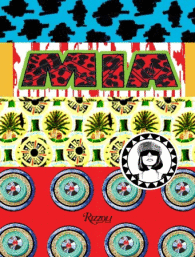
M I A has always been an interesting genuinely multi-layered musician, her sound cross genres as well as countries and cultures as she has crossed mediums. 2012 seemed to be her year performing at Superbowl alongside Madonna & Nicki Minaj & creating a book that captures the artist.
The book is a honest insight into the world of MIA more visually charged then texted, allowing you into the world of Maya and how she created and crafted M.I.A her struggles with not only her identity as a person yet as an artist and a creative talented polymath trying to break through and be heard.
M I A is a beautiful book well worth a read not only for fans of the singer but for other creatives who may have fallen off track, success took Maya a while yet when she received it, she seemed to do things her way and its paid off
------------------
My Brother The Devil- BFI Film Fest 2012
Any drama that focuses on the ‘urban’ lifestyle & that is set around the council estates of London or the UK usually falls into the pattern of repetition .You know what’s in store and in most cases how it ends, there’s usually tragedy, angst, anger, drugs, sex and turf wars. We’ve seen it all before in numerous forms from The Bill to Channel 4’s Top boy, Noel Clarke’s Kidulthood & Adulthood as well as others like Bullet Boy.
To say that My brother is the devil steers clear of these trappings would be a lie but it does cast a light on other inpiduals of ethnic minority (Egyptian) who are as alienated as the predominately black youths featured & streotyped within these dramas. These kids have the the same feeling of alienation, who’s culture of their parents clash with their own views, parents who were happy enough at one point to move to a country were jobs were plentiful and life more stable, this is no longer an inheirted outlook with their views old fashioned the thought of being a nine to five slave trapped in the system on a low paid wage isn't one to subscribe to. To good for work yet to proud to sign on & so theres only one other way to make ends meet and by what else but selling drugs that fuels post code wars causing territories were lines can’t be crossed.
The story focuses on Mo who looks up to his elder brother Rashid and his life & (hanging on the streets, selling drugs and fighting ) making fast money and living as much as a life as he can. Change is in the air with Mo graduating from school and obtaining decent GCSE’s which sets him up for a promising future yet one he is doing his best to steer himself away from. Whereas a tragedy within Rashid’s immediate circle allows for Rashid to revaluate his life and focus more on the straight and narrow getting a job and meeting an employer that allows him to question every aspect of himself, yet escape is never that easy.
Elements of refreshing notes are evident within the film and it does question faith, identity and masculinity and how its viewed on the streets, It shows how infectious and poisonous the street life can be yet with the sense of family and belonging and the lure of easy cash it can draw even the smartest of youth’s in.These are kids doing what they can to get by. It’s beautifully shot and doesn’t go over board and shows that there is beauty within the most repressed areas of London.
------------------
Restless- BFI Film Fest
Gus Van Sant returns to capturing what he captures the best, the essence of youth.
Two young outsiders come together but for how long? Due to tragic circumstances fate is ready to tear them apart. It’s an interesting insight to human mortality and how different young people cope with it.
The young stars of the film Mia Wasikowska and Henry Hopper pull out all the stops to deliver a heart wrenching coming of age tale.
------------------
WEEKEND- REVIEW-BFI FILM FEST
Much hype has been made about Weekend, its one of those films you hear loads about before you see and has had an extended run on the festival circuit now finally hitting its home screens.
The story focuses on Russell & Glen, where Russell is more reserved with his sexuality & Glen more out and proud it seems the two are polar opposites at first, meeting in a club and spending the weekend together, bonding over Glen a budding artist asking Russell to participate in his project which involves asking about their shared encounter, hook up and the sex that follows. They soon find they have more in common than they would have previously thought each helping one another to overcome some sort of issue within their lives.
It offers an optimistic look into yes a gay relationship but its more than that its a love story where those falling in love happen to be of the same sex. Haigh is able to perfectly capture those awkward moments of getting to know someone as the walls fall and you let another inpidual in.
Beautifully shot in Nottingham, finely written. Weekend is an intimate piece of work which shines in all the right places it offers something new and feels fresh.
------------------
Another Portrait Book by Jefferson Hack- 7L Steidl :
is the 2nd tome n a series of 3 collectable books which include Another Fashion Book and the 3rd and final Another Art Book all from the fashion forward thinkers behind Another Magazine. The book is a collection of Another’s portraits shot, styled and produced by the industries best as well as the ground breaking covers in which celebrities ranging from Hollywood darlings, Icons, hipsters and artists such as Nicole Kidman, Tilda Swinton, Kate Moss are all transformed and seen in a new way as well as several other portraits that have been featured on the pages of the magazine ranging from a perse range of names such as Bjork, Chloe Sevigny, , Kylie, Olsen Twins and Beck, With fashion and photography from Nicola Formichetti, Panos Yiapanis, Katy England and Alistair Mackie along with Juergen Teller, Mario Sorrenti, Hedi Slimane amongst others.
------------------
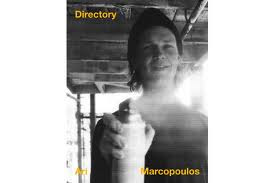
Ari Marcopolous- Directory- Rizzoli
Famed in both fashion & art photographer and film maker Ari Marcopoulos is a photographer who seems to capture all that surrounds him including the reclusive sub cultures of skaters and graffti artists as well as members of his own family. The depth of intimacy and format of his pictures allow one to wander into a voyeuristic position. Mimicking a phonebook, Directory comprises of 1,200 photographs. Limited in edition each book contains a print by the artist.
Just Kids by Patti Smith- Bloomsbury :
Told by one who experienced it all first hand, none other than Robert Mapplethropes lover and best friend Patti Smith who recalls the time not only they spent together but other eras that have past in riveting detail. Rubbing shoulders with NYC elite and how fame and fortune came to them eventually . This is a tale in which we know the end yet a gripping read all the same to see how two visionaries came into their own, a tale of two artists before they knew they were artists.
------------------
House of Boys
At first I thought it was just another cliche gay movie and believe me i've seen my share of them, it was a slow burner with the all so typical unrequited love theme running through and although set in the 80's the tolerance for homosexuality seems to be quite high.
The film center's around a young man named Frank who runs away from home and finds himself at the House of Boys in Amsterdam a gay disco cum dance club where the dancers live and work under the roof offering more than private dancing to some customers.
Frank finds himself falling for the clubs star attraction the straight yet gay for pay Jake who has a girlfriend. The two share a room and soon Frank's feelings can't help but grow and when Jake is struck down with a mysterious illness it is Frank who rises to the challenge of caring for him.
Its an interesting insight and look at AIDS and how it destroys lives, in an age when it was new and not much known about it many fell victim and still do and it pains me to know and think of all the young men gay and straight that feel they are immune to it
------------------
Dogtooth-DVD- Verve Pictures
A Greek film that has the power to challenge and change one's mood. About the lengths parents will go to, to try and protect their children's innocents.
The Parents are well to do, with a large house comprising of copious amounts of land and a swimming pool. It seems the mother has sacrificed her freedom and life staying at home and within the house in order to inflict the beliefs her husband and herself have decided to enforce on their children. A fantasy/ fable where tales are twisted and turned into lies in order to keep their family restrained and in check. Whilst the father leaves the house in a car to go to work, we learn nothing about the parents past lives or what led them to this point. The Children are of various ages yet have a childlike quality, although they look as if they are in their mid to late teens or even early 20's. To entertain themselves they play silly games and their father allows them to watch TV yet only video's he has recorded of them which they know word for word. It is only when the Father decides to bring in Christina a security guard at his work place in which he pays her to pleasure his son that the world he has created begins to fall apart.
Where the dog trainer says that dogs are like clay and can be moulded into a way in which you want them to behave mirrors that of the children who are shaped purely by their parents lies and filled with ideas and an outlook in which the adults have chosen to supply
Its an unsettling film that highlights many issues in the world can innocence really be protected? Is the morals that we inherit from the past generation right for the current one? And of course the horror case of Josef Fritzl.
------------------
Black Swan - BFI Film Fest
Black Swan is a tour de force which highlights how thrilling the ballet world is and equally how competitive and hard working those who inhabit that world are. It follows Nina (Natalie Portman) ascent as a ballerina as a shy techically perfect extra to the annoucement of her becoming the new Swan Queen a role that is coverted globally. It is here Nina struggles as she is able to portray the White Swan perfectly but it is the Black Swan she is finding difficult to channel. A role in which she must forget all she has learned, losen up and allow a darker side of herself to come through.
Black Swan shows the power of film one that is able to capture and embody other forms of art, showcasing how intriguing and beautiful dance is.
Hicockian Paranoia is evident with small glimpses of a surreal world that the arts world is with slight movements here and there, they add to an unsettled atmosphere. A more than interesting peek inside the closed doors of ballet a place that is not documented to often.
------------------
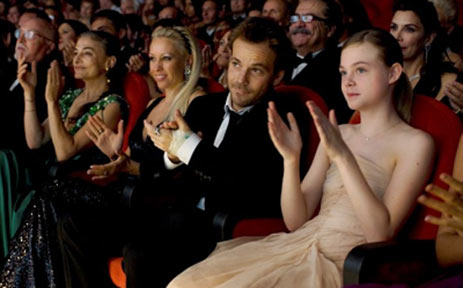
Somewhere- BFI Film Fest
Quite short and minimal the first scenes we follow Jonny Marco (Stephen Dorff) around as he leads his life and goes through his routines from routinely watching the same twins pole dance to different songs in different costumes on different days to a wide range parties and of course loads of women, who he seems to mistreat and mislead. It showcases how to live a hip life in your middle age. Yet one that will only fulfil them.
Jonny is successful and rich, yet has no solid foundations he lives in the Chateau Marmont, no solid home of his own, his life is interrupted by his occasional film shoots and the press and junkets he has to do to promote them usually bedding his co stars as well, Success is evident in how he lives with flash cars, helicopters as transport and not needing to worry about money, He has a Ed Ruscha just lying on the floor 'Beer, Beautiful, Girls' which pretty much sums up his existence.
It is only when his daughter comes to visit for a longer period than usual that he sees how empty his existence is, Chloe ( Elle Fanning) is the only solid thing he has and that pretty much adds solidity to his being, she is also the only girl he is able to maintain a long term relationship with. When she goes off to camp it is only then he realises he can't continue with the fruitless life he leads.
An existential minimal piece where more is said through action then word, Somewhere is good not great yet it seems to be the best film yet out of Sophia's career, she is maturing and has found a voice that is uniquely hers.
------------------
Another Year- BFI Film Fest
A peek into the lives of a middle class couple and the world of those who surround them, a content couple surrounded by others of discontent
Life isn't as rosy as it usually is portrayed on screen this isn't a grand story about some life altering event, the pace is steady and its more about the repetition of life and how nothing pans out as we plan it from Mary who's reached middle age alone clinging to her friend Gerri and her family or Ken Who is much like Mary drinking his life away to get through his days losing his friend and envying the youths that now occupy the pubs turned bars he once used to frequent or Ronnie who's world is crumbling as his wife has recently passed and a wayward son who appears and disappears.
Mike Leigh is able to make the mundane enjoyable to draw out and entertain us with what we maybe presented by in our everyday life, this is more true to life than most films from Leigh's technique of creating characters with the actors before the shoot and not having a set scripted dialogue allowing improvisation, even from the lighting, tonal effects the muted colours and most importantly the language all play a part in grounding the film in reality.
This is a film about us, about how our lives might end up and that you will never truly have control over them, you may love and lose, you may settle down only to produce a watless heir or like Tom and Gerri you may find your soul mate and be truly lucky.
------------------
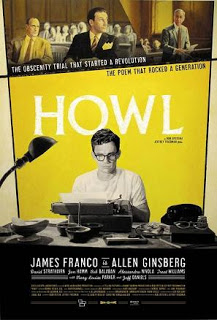
Howl- BFI Film Fest
Allen Ginsberg's poem, Howl caused outrage in America when published causing its publisher to have to go to court.
The film looks at the trial and bits of Ginsberg's life enacted by James Franco and the poem itself done in animation form.
The Film is cut into 3, The trial in which we see the courtroom drama reenacted, the poem itself which is done via animation, the reading of the poem and interviews with Ginsberg (Franco) done in black and white and with documentary footage played in some scenes and also flash backs of Ginbergs life.
Howl allows for one to remember the importance of Ginbergs poem on American Literature and how it helped pave the way for inpiduals to express themselves in which ever way they see fit without having to fore go a literary censor.
------------------
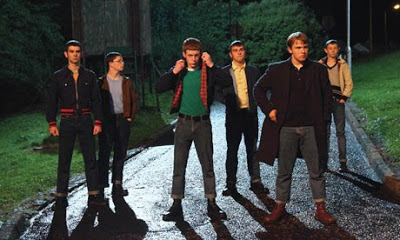
Neds- BFI Film Fest
A brutal coming of age tale about growing up in 70's Scottish estates, Johnny at first is a soft boy who prefers books to play fights yet is protected from the rough and rogues by his older brother who gained respect and street cred on his many adventures. We see the transformation of Johnny as he begins to hang with the wrong crowd ousted from the right by snobbish behaviour.
The playground Johnny enters thereafter is one where cops and robbers is forever played yet the cops never seem to truly pin down the robbers. Johnny falls deeper and deeper into this world quitting school to become a full time member, even savagely beating a boy to the point of permanent brain damage.
The world we see here is bleak were there is not much hope for those who inhabit it, yet its told honestly enough to grip the viewer until the end.
------------------
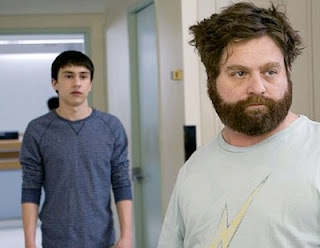
It's kind of a funny story- BFI Film Fest
A coming of age story about a teenager called Craig (Keir Gilchrist) who is dealing with his problems as well as becoming aware of the many issues and crises that the world around him has, he is just trying to understand both himself, others and why the world is in the state it is, with suicidal thoughts plaguing his mind he decides to check himself into a mental institute. There he meets several others and he notices how small his problems are compared with those around him. The time away from his friends and family helps him realise more about who he is and who he wants to become.
Although there is much Hollywood humour the overall subject matter is quite dark, these are people at their lowest points admitting they have problems and trying their best to solve them.
A funny light hearted tale with laugh out loud scenes especially those in which Craig escapes into his imagination, Keir Gilchrist breaks into leading man material with conviction and marking him as a one to watch.
------------------
Womb- BFI Film Fest
An interesting layered drama that deals with not being able to let go of a loved one. Rebecca (Eva Green) falls for Tommy (Matt Smith) when they are children but they are pulled apart by Rebecca's families relocation to Japan. 12 years later Rebecca returns and the flame is rekindle yet tragic circumstances pull them apart. Rebecca makes the decision to clone Tommy and raise him as her own. There are scenes that maybe uncomfortable to watch as the young adultlescents frolic around to the lingering sexual tension between adult Rebecca and young Tommy.
The location in which the movie is shot also allows for a haunting and timeless feel to be added in which a house on stilts looks over water and an endless beach with grains of sand blowing back and forth into and out of the sea
------------------
Heartbeats- BFI Film Fest
Dolan's second film is achingly cool which shows the love triangle between Marie (Monia Chokri), Francis (Xavier Dolan), and Nicolas (Niels Schneider).
Marie & Francis are best friends who fall for the same boy Nicolas, he is able to toy with their emotions and lead both on suggestively, causing tension in a once perfect friendship.
Dolan is able to capture the essence of hip youths from the clothing, hairstyles, make up and music, with the most captivating scene happening to the score of The Knifes- Pass This On, both Marie & Francis watch both transfixed and envious as Nicolas dances with another girl, we see flashes of this seductive dance that is not only seducing the girl he is entangled with but those who are watching. Seen through the eyes of Francis with each flash an image of a white marble statue portraying a nude male, this is how Francis sees Nicolas without flaw.
Dolan seems to be able to make films capturing his age group for his age group, his technical skill has increased tremendously since ' I Killed My Mother' and at 21 being able to complete a film of this merit ceases to amaze me, my eyes are firmly on Dolan.
------------------
Miral- BFI Film Fest
Tells the story of three women who's lives span the decades and the effect the war has on their lives in the process showing the struggles that those who lived in the times they lived shared, the blending of documentary footage and news reels helps show the raw honesty and reality of the theme the movie deals with. There are some scenes such as that with Mirals mother in which the artist in Schnabel emerges and with how he deals with the delicate matter. It is with Miral's generation that inter mixing of the two sides happen that these people are people and are very much the same.
A look at the Israeli-Palestine conflict via the eyes of Julian Schnabel an American Jew, by doing so no one is to blame not the Jews or the natives. The film doesn't point the finger at one side but what it does is help to educate and allow people to become aware of a problem in the world that has existed and still exists it is more a light education and a look into a few lives that the war has effected.
------------------
Never let me go-BFI Film Fest- It was great to see Keira Knightley in a different light (as usually she is a fragile victim) where as in Never Let Me Go, she is fragile but more of a manipulative bully. It was also good to see Andrew Garfield (Tommy) in a film role and played convincingly, an isolated bumbling shy boy and Carey Mulligan (Cathy H) who cares too much for others to disturb them putting them before her.
There are many layers to the story which is spilt in 3 sections from the beginning section which shows how cruel adults can be to youth's manipulating them and telling lies and stories so convincingly that these children believe them. Also how your childhood can effect you for the rest of your life, being so sheltered that when you reach the outside world you have no clue what to do or how to behave. The middle section seemed to be more about how they were all unworldly and at the least given a brief time to be human yet know their fate, so how cruel it is? to give them a glimpse of life yet everyday that goes by it draws closer to the day when they will be called upon. Keira's character (Ruth) still is cold and fragile as she was as a child whilst Cathy is still yearning for love and to learn new things and feel new sensations. The end section is more about the effect we have on these people who are basically like Animals being herded groomed and how inhumane and selfish it is as these humans all they want to do is live and love yet if it was granted and they lived and loved and entered the world would the world infect them? And bring them to being selfish and cruel like most humans who are unaware of how precious life really is.
------------------
William S Borroughs- A Man Within- BFI- Film Fest
Created by a young man thristy for knowledge to learn and know more about an idol, The director goes on a road trip to discover just who borroughs was being able to get archive footage as well as interviews from the many peoples who lives he touched and influenced across a perse variety of people from Sonic Youth, Patti Smith, Gus Van Sant John Walters to his ex lovers and companions.
It is interesting to witness the effect Borroughs had on culture and still has today. His gun shot in many ways mirrors that of Hirsts spin paintings with the outcome uncertain. Borroughs seemed a complicated man yet was able to vent the many issues he had by creating a variety of complex worlds across many mediums.
------------------
'There's only room for one genius in this family'
Tetro is a film about the struggles of shared genius in one family and the fight to possess this genius outright.
Bennie (Alden Ehrenreich) lands in Buenos Aires in pursuit of his long lost brother who he has not seen for ten years, Tetro, who has since become a recluse and decided to put an end to pursuing artistic endeavours and lives comfortably with Miranda his girlfriend, working at the local theatre on controlling light (light seems to hypnotise every member of the family, which maybe a metaphor for the bright lights of stardom taunting them all) with the arrival of Bennie intent on finding out why the brother who promised to return and take him with him never fulfilled his promise and determined to unlock their families many secrets as well as try to save his brother from the artistic isolation he has become entrapped in, Changing both of their lives forever.
Vincent Gallo portrays Tetro, an artist at war with himself 'He's like a genius without enough accomplishments' with ease his hollow eyes and haunting looks are more then convincing. Alden Ehrenreich (Bennie) conjures a naive boy on a journey to manhood, his talent and air of youth are both apparent being able to carry off a movie as grand as this, by stealing scenes and taking directions from both established artists as Gallo & Coppolla as well as others in the cast he is in no way out done and that is what makes for impressive debut.
The film has the power to draw emotion and that emotion is not settled with the films ending the damage has been done and he who reeked it now rests and those who felt it still live with the wounds. Its stillness and slow burning gloss evoke films of a by gone era as well the powerful moving overblown drama which could be compared to Italian masters such as Fellini.
Tetro is a powerful piece of cinema at the high end of the independent spectrum only an auteur as skilled as Francis Ford Coppolla could write produce and direct such a movie cannoning forth genius in both the script and stunning visuals executed with a sure hand and exceptional control over elements like lighting, setting and the actors performance.
------------------
I Killed My Mother- BFI LGBT Film Festival
Xavier Dolan has to date appeared at the Cannes Film Festival for two consecutive years. At each one, he has presented a film that he has written, directed and starred in. The first, I Killed My Mother (a title extremely uncomfortable to say), was also selected for this year’s BFI LGBT Film Festival – and he’s done all this at only 21 years of age.
The film begins with 16-year-old Hubert (played by director Dolan). His relationship with his mother is a difficult one, strained by constant arguments, by the simple irritation of her presence, by the way she eats, and by her garish dress sense. The opening scene sets the tone of the frustration of living in close company with another person, with the mother’s chomping and messy eating, and Hubert taking the parental role.
It seems Hubert and his mother were once close, through the vintage footage shown of the two, but they have somehow grown apart. Hubert seems to find solace in others and is able to form relationships quite easily: from the blossoming and loving relationship he shares with his boyfriend Antonin, to the connection with his teacher, who becomes his encouraging confidant, to the brief encounter he has at boarding school.
Antonin’s mother is young, open, carefree and happy. The relationship she shares with her son is the antithesis of the one Hubert has with his own mother. Antonin’s mother is so open that she happily plays with her lover in front of her own son.
There is no right or wrong here, although a sympathetic light is cast on the protagonist. We also begin to feel for Hubert’s mother. Although her main portal of escape is shutting out the world and her son with the TV, she is nonetheless a single mother trying to raise a child who has become so distant. She only realizes that her son is gay by a casual remark from Antonin’s mother about their sons’ looming anniversary. Her outburst directed at a school headmaster helps you understand her plight a little more.
Hubert is going through a transitional period, and his mother is unable to grasp that. Nonetheless, Dolan is able to capture brilliantly the breakdown of a relationship—a relationship that ties two people by blood irrespective of their situation.
Dolan uses a variety of techniques such as still imagery set to a relaxing score, exploring his mindset and mood in slow-motion scenes. He breaks the fourth wall with Hubert explaining his problems directly to the viewer through his diary entries, while at the same time enhancing our voyeurism as we watch the intense relationship he shares with his mother.
Xavier Dolan has a flair and craft that is rough, yet polished enough to make this a significant piece of cinema. The film’s low budget is omnipresent, yet this gives the film added depth and realism. For one so young to complete something as accomplished as this makes you wonder what he is capable of.
------------------
Nighthawks- BFI-DVD
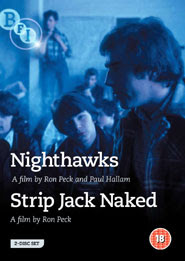
Improvised dialogue by non actors make it feel documentary, weird shots: one lingering on eyes for like two minutes as music plays from a club scene, possibly to show Jim is observing the scene, then another where the car is in the distance and all that can be seen is the car driving and its lights, another the back seat shot of the front seats and the actors heads. It also shows why gay clubs were important at those times, a place a gay haven where gay guys could literally be themselves act like other couples, dance, kiss and make out, it even has speech between characters where they overlap and talk over one another.
The film is quite raw and authentic, the camera is not even steady. Its so weird, weird in the sense that its different yet not shot like a film nor a documentary, its realistic but not numbingly so.
The final scene between the children when the two classes merge with some against his sexuality not understanding and others caring for their teacher beyond his sexual preference. These are the generation next and with them the tolerance for gays resides , this scene is one of the most moving.
The Film is very raw blurring the line between documentary and film brilliantly although all situations had been set up it is clear many where left to free fall and come into there own. This is an important piece of work for the time it was born from and a time capsule capturing struggles of a new found freedom that was not all so free. Available from the
------------------
Photography: A Cultural History (3rd edition) by Mary Warner Marien
A Comprehensive and detailed look at the history of photography and its impact on various mediums and culture like art, politics, advertising
The book champions a variety of the artforms vast range of artists long forgotten or many of it's quieter hero's that have contributed to the art form over it's 200 year odd history such as F.Holland Day, Von Gloeden, Lewis Carroll, Thomas Eakins, Eadweard Muybridge, Ansel Adams, Seydou Keita.
The wide selection of photos included with some quite rare are amazing examples provided to questions the points raised and to reinforce the statements said. It is both educational and intriguing. Helping dissect photography and enable the reader to read photographic imagery.
------------------
Give Me Your Hand
Like other road trips, this is a movie of self discovery and finding oneself, but how can you find yourself whilst always in the company of another? Or how can you find yourself when that other is supposedly so like you? There is not much of a back story but that's what adds to the mystique of the twins, and the trip, a trip or this one is not about what they have done or where they've been rather where they are going and who they will become.
Antoine possesses a certain sort of jealousy and possession; he seems to want to take all that is or will be truly his brothers own from the girl he seduces from him to the blossoming romance on the ranch that he pulls Quentin away from by leaving abruptly. Their constant battles are moments of physical intimacy, a way of destroying or calming the tension that is built up in a relationship where they can't live with or without the other or is this a way the only way that their two bodies can touch, feel one another the thin line between one act of violence to an extremely personal other?
Of course there is things that are left unsaid many things as this a movie where image is more important than words, where expressions are what speaks, the emotive states that each brother goes through are caught and is those we register, such as when Antoine collapses and the Spanish guy helps him and is pushed away. This is a brief moment of intimacy between two men, could Antoine be repressing feelings? Living a lie whilst his brother lives in truth
So many questions I have asked as so many are left unanswered, the film does a good job at portraying a complex relationship and also one at the trouble of self discovery and the problems that arise when one finds them self and the strain that can be put on long term friendships because of this, There are moments of beauty such as the brief time Quentin spends with his male lover frolicking naked that evoke a Mcginley like essence and where the brothers are driving away from the ranch and it lingers on their faces as the truck moves.
What is captured is an intense relationship between twins quite like that of Bertolucci's Dreamers, This is a beautifully shot love story that leaves me with so many questions but here is one I wish to ask, where does the pide between brotherly love and physical attraction begin especially when physically you are one in the same.

More Background On RE-BELmagazine.com
RE-BELmagazine.com was the online home of RE-BEL, an independent British fashion and culture magazine that emerged from London’s creative scene around 2010. Although its active publishing period was relatively brief, RE-BEL occupied an interesting position in the independent-magazine landscape of the early 2010s. It combined fashion editorials with interviews, film criticism, photography, art, books and commentary on contemporary culture, while deliberately positioning itself outside the conventions of mainstream fashion publishing.
The magazine was closely associated with Rasharn Agyemang and Jaiden-Jeremy-James, the young creatives behind the London menswear label Jaiden rVa James. RE-BEL developed as another outlet for the pair’s interests in fashion, art, photography, cinema, sexuality, youth culture and people whose work challenged conventional expectations.
RE-BEL was not simply an online fashion blog. It developed into a printed glossy magazine, attracted contributors with significant reputations in international fashion, was distributed internationally and generated coverage from fashion publications and industry websites. Contemporary evidence shows at least five numbered issues appearing between 2010 and 2012, while RE-BELmagazine.com also carried interviews, reviews and other material connected to the magazine’s broader cultural interests.
Today, the website is best approached as a surviving record of a particular period in London independent publishing: a time when print magazines, fashion blogs and rapidly expanding digital media were beginning to overlap.
Who Created RE-BEL Magazine?
RE-BEL grew out of the creative partnership surrounding Jaiden rVa James, the menswear label established by Rasharn Agyemang and Jaiden James.
The two designers were unusually young when they began attracting attention. Dazed profiled them in 2008, identifying Jaiden James as 20 and Rasharn Agyemang as 21. Agyemang had studied at London College of Fashion, while James had studied at the Fashion Retail Academy. Their fashion work soon placed them within London's experimental menswear community.
Jaiden rVa James received support through MAN, the influential menswear initiative created by Fashion East and Topman that helped develop emerging London designers. The label also attracted fashion-industry supporters and produced clothing worn by prominent figures, including Lady Gaga.
By 2010, RE-BEL had become another important part of their creative identity.
Contemporary Vice coverage is particularly revealing. In a June 2010 feature about Jaiden rVa James, Vice described RE-BEL as an “impressive magazine” containing work by photographers, stylists and writers normally associated with substantially larger publications. That observation helps explain why RE-BEL attracted attention despite being an independent publication created by very young founders.
The magazine's credited creative leadership included Rasharn Agyemang and Jaiden-Jeremy-James as creative directors, with James also serving as editorial director. Rob Meyers of RBPMstudio was credited as art director.
Later accounts of Agyemang's career provide additional perspective. Agyemang has described launching RE-BEL after putting the Jaiden rVa James fashion label on hold and working with acclaimed stylist Simon Foxton. He recalled that the magazine received strong industry feedback, attracted important contributors, became a glossy publication and was distributed internationally.
A later Vogue profile describes Agyemang as co-founder and creative director of the “cultural journal Re-bel,” emphasizing that the publication brought together fashion and broader cultural interests rather than operating solely as a clothing magazine.
The Philosophy Behind RE-BEL
RE-BEL's name was a concise statement of purpose.
Its editorial philosophy centered on rebelling against normality rather than simply reporting fashion trends. The magazine wanted to participate in shaping contemporary culture, support emerging creative talent and recognize established figures whose work had already influenced global culture.
That mission helps explain the eclectic mixture found in its pages.
Fashion mattered enormously, but so did film, photography, art, literature, sexuality, identity and youth culture. RE-BEL's editorial choices repeatedly gravitated toward people who questioned conventional boundaries.
The publication was particularly interested in the relationship between emerging talent and established creative figures. That balance distinguished it from an ordinary fashion blog devoted primarily to new collections, models and products. RE-BEL could feature an emerging model or designer alongside filmmakers with established careers or discuss an experimental independent movie beside internationally known fashion photographers.
It also embraced the intersection of old and new publishing. RE-BEL existed simultaneously as a physical magazine and a digital publication at precisely the moment when fashion media were being transformed by online publishing, social networks and instant access to runway imagery.
That combination was particularly appropriate for a magazine interested in both fashion heritage and cultural change.
From Independent Project to International Glossy Magazine
RE-BEL's development appears to have happened quickly.
By summer 2010 the publication was already generating fashion-industry attention. Its second issue appeared in September 2010, and contemporary fashion sites covered editorials from it. By spring/summer 2011, Issue #3 was being promoted through established fashion-media outlets. Issue #4 appeared later in 2011, and Issue #5 followed for spring/summer 2012.
This progression establishes that RE-BEL was more than an experimental one-off publication.
The second issue included “Pimpin' Ain't Easy,” photographed by Ben Weller and styled by Rasharn Agyemang. Fashionisto covered the editorial in September 2010, while Fucking Young! also documented material from the issue.
Issue #3, Spring/Summer 2011, included a Doug Inglish editorial featuring models Simon Nessman and Valeria, styled by Agyemang. Design Scene covered the shoot in March 2011.
Other contemporary RE-BEL work included photography by Damien Blottière and Ben Weller, with Agyemang frequently appearing in styling or fashion-editor roles.
By Issue #4, RE-BEL was able to put together a particularly strong fashion presentation. The cover featured Tafari Hinds, photographed by Daniel Sannwald, styled by Rasharn Agyemang and art directed by Rob Meyers.
Issue #5 appeared for Spring/Summer 2012 with a cover photographed by Brett Lloyd and styled by John McCarty. Contemporary fashion coverage dated the issue to February 2012.
Later career profiles of Agyemang state that RE-BEL ultimately became a glossy magazine distributed internationally. More recent reporting also indicates that Agyemang eventually sold the magazine.
Notable Photographers, Stylists and Models
One of the clearest indicators of RE-BEL's standing is the talent associated with it.
Later biographies of Rasharn Agyemang identify major fashion photographers Hedi Slimane and Juergen Teller among RE-BEL's contributors. Vogue's PhotoVogue profile of Agyemang similarly highlights Slimane and Teller when describing the publication.
That is notable for a relatively young independent magazine. Slimane and Teller were already internationally significant creative figures, associated with some of fashion's most influential magazines and houses.
RE-BEL also published work involving photographers including Christian Oita, Ben Weller, Doug Inglish, Daniel Sannwald, Damien Blottière, Brett Lloyd and others.
Models appearing in documented RE-BEL editorials included Oliver Cheshire, River Viiperi, Simon Nessman, Tafari Hinds, Valeria, Breton, Ben Warnock, Elliot Dillon and Jed Texas.
Models.com, an important fashion-industry database, retains records of several RE-BEL projects. One Spring/Summer 2010 editorial featuring Oliver Cheshire credits Christian Oita as photographer and Rasharn Agyemang as fashion editor and stylist. Another Fall/Winter 2010 story, “Sensual Scents,” featured River Viiperi and was photographed by Oita.
These surviving credits are useful because they independently confirm RE-BEL's participation in the professional editorial-fashion ecosystem rather than merely documenting a self-published personal project.
Fashion at the Center of RE-BEL
Fashion remained one of RE-BEL's strongest subjects.
The magazine followed both established fashion figures and younger designers, stylists and models. Its editorial taste leaned toward experimentation rather than conventional commercial fashion.
Its interviews could become lengthy discussions about creative philosophy. French designer Gaspard Yurkievich, for example, discussed his Parisian identity, Hollywood glamour, sensuality, fashion history, his experiences with Jean Paul Gaultier and Thierry Mugler, collaboration and the difficulties of running an independent fashion company.
Greek designer Yiorgos Eleftheriades discussed the relationship between realism and creativity, showing collections internationally, menswear and womenswear, changing ideas of masculinity and the increasing speed of fashion communication.
Such interviews demonstrate that RE-BEL was interested in how designers thought rather than simply what they produced.
The connection with Jaiden rVa James also gave RE-BEL credibility within London's experimental menswear environment. The label itself was known for provocative styling and theatrical presentations. Vice's 2010 coverage placed both the clothing line and magazine squarely inside London's highly interconnected alternative fashion scene.
RE-BEL therefore functioned partly as a publication and partly as an extension of a wider creative network.
Film, Queer Culture and Independent Cinema
One of the most distinctive characteristics of RE-BELmagazine.com was the amount of attention it gave to cinema.
The magazine's interests extended well beyond fashion films or celebrity interviews. Its film coverage frequently concentrated on independent cinema, LGBTQ+ stories, outsider characters and directors with unconventional visual languages.
A substantial interview with filmmakers Rob Epstein and Jeffrey Friedman explored Howl, their film about Allen Ginsberg starring James Franco. The conversation moved through documentary filmmaking, animation, Ginsberg's sexuality, censorship, gay representation, Gus Van Sant, Brokeback Mountain, queer cinema and the effect of digital technology on filmmaking.
That is representative of RE-BEL's broader approach: culture was treated as interconnected. Literature could lead to film, film to sexuality, sexuality to politics and politics back to artistic freedom.
The site also explored Pascal-Alex Vincent's Give Me Your Hand, including conversations concerning twins Alexandre and Victor Carril. The discussion touched on French cinema, Japanese culture, 1970s road movies, Gus Van Sant, sexuality, sibling identity, artistic references and the visual construction of the film.
RE-BEL's reviews similarly covered films such as Weekend, I Killed My Mother, Heartbeats, Dogtooth, Black Swan, Somewhere, Never Let Me Go, Womb, Nighthawks, My Brother the Devil, Tetro, Miral and Howl.
Many were festival films, independent productions or works concerned with characters living outside conventional social expectations.
This made the BFI and festival circuit a natural cultural territory for RE-BEL.
The Importance of LGBTQ+ Themes
LGBTQ+ culture was not treated as a token subject by RE-BEL. It ran through much of its film coverage and broader editorial identity.
Its coverage of Weekend emphasized the emotional relationship between two men rather than treating homosexuality as the story's novelty. I Killed My Mother prompted discussion of Xavier Dolan's depiction of a gay teenager's relationship with his mother. Nighthawks was considered both as filmmaking and as a historical depiction of gay social life.
The Epstein and Friedman interview discussed the cultural importance of Allen Ginsberg, gay liberation and films that helped change attitudes toward homosexuality.
This editorial openness placed RE-BEL within a longer tradition of independent fashion and culture magazines that provided space for queer imagery and ideas long before equivalent representation became commonplace in mainstream lifestyle media.
It also fit naturally with RE-BEL's declared goal of giving a voice to people who might otherwise be overlooked.
Books, Photography and Art
RE-BEL's cultural interests were broad enough to include substantial commentary about books and photography.
Among the works discussed on the site were Patti Smith's Just Kids, Ari Marcopoulos's Directory, Jefferson Hack's Another Portrait Book and Mary Warner Marien's Photography: A Cultural History.
These selections reveal a consistent editorial sensibility.
Patti Smith and Robert Mapplethorpe represented the relationship between art, identity, friendship and New York counterculture. Marcopoulos documented subcultures including skateboarders and graffiti artists. Jefferson Hack's publishing projects represented the convergence of fashion, photography, celebrity and contemporary art. A history of photography provided the larger intellectual framework for understanding how images shape culture.
RE-BEL was therefore not simply interested in beautiful pictures. It was interested in why images matter and how artists, photographers, filmmakers and designers create cultural meaning.
RE-BEL's Audience
No reliable public circulation or audited readership figures appear to survive, so claims about RE-BEL's popularity need to be made carefully.
There is nevertheless substantial evidence that the magazine achieved visibility within fashion's professional and enthusiast communities.
Its work was covered contemporaneously by Vice, Design Scene, The Fashionisto and Fucking Young!, while editorial credits survive on Models.com and other fashion databases. Agyemang later recalled strong industry feedback and international distribution.
That suggests RE-BEL's importance was more qualitative than mass-market.
Its natural audience consisted of fashion students, stylists, photographers, models, designers, filmmakers, artists and culturally curious readers interested in independent publishing. Readers of magazines such as Dazed, i-D, AnOther, 10 Men, V, Vogue Hommes and other visually adventurous publications would have understood RE-BEL's creative language.
The magazine was particularly suited to people interested in the overlap among menswear, photography, independent cinema, queer culture and emerging creative talent.
London as RE-BEL's Creative Location
RE-BEL was fundamentally connected to London.
Rasharn Agyemang studied at London College of Fashion and built his career in London's fashion industry. Jaiden rVa James participated in the city's emerging menswear movement and received support through the MAN initiative associated with Fashion East and Topman.
This placed the founders near one of the world's most influential concentrations of experimental fashion talent.
London College of Fashion, Central Saint Martins, Fashion East, London Fashion Week, Dazed, i-D and numerous independent magazines, photographers, stylists and model agencies formed an ecosystem in which a publication like RE-BEL could develop.
Geographically, London also put RE-BEL within easy reach of major cultural institutions and events, including the British Film Institute and London's film festivals, which feature repeatedly in the site's movie coverage.
At the same time, the publication was internationally oriented. Its interviews and editorials moved easily among London, Paris, New York, Athens, Barcelona and other fashion and cultural centers.
Press Coverage and Industry Recognition
There is no clear evidence that RE-BEL itself won major publishing awards, and it would be misleading to attribute awards received by its subjects or contributors to the magazine.
Its industry recognition is better measured through the caliber of its collaborators and the publications that noticed its work.
Vice's 2010 assessment is especially important because it came when RE-BEL was still young. The magazine was already being recognized for securing contributors normally associated with considerably larger publications.
Design Scene subsequently covered its Spring/Summer 2011 work. The Fashionisto featured RE-BEL editorials. Fucking Young! repeatedly documented its issues, covers and fashion stories.
The fact that RE-BEL's editorial credits remain catalogued on Models.com also provides a lasting professional record.
Later profiles of Agyemang continue to mention RE-BEL as a significant stage in his career, rather than treating it as a forgotten side project. Vogue's profile describes him as the co-founder and creative director of the cultural journal and specifically notes major contributors associated with it.
That continuing recognition may be the magazine's most meaningful legacy.
What RE-BEL Was Known For
RE-BEL became known for a combination of characteristics rather than one signature feature.
It championed emerging creative talent while working with established names. It treated fashion as part of culture rather than an isolated commercial industry. It embraced menswear at a moment when London men's fashion was becoming increasingly adventurous. It devoted meaningful space to LGBTQ+ cinema and identity. It mixed fashion editorials with serious interviews and subjective cultural criticism.
Most importantly, it possessed a recognizable point of view.
Its writing could be informal, personal and sometimes rough around the edges. That quality separated it from the polished institutional voice of mainstream fashion magazines. Reviews often read like the immediate reaction of a culturally engaged viewer rather than the work of a conventional newspaper critic.
That informality is part of the historical appeal of RE-BELmagazine.com today.
Cultural and Social Significance
RE-BEL belongs to an interesting transitional era in fashion publishing.
During the late 2000s and early 2010s, traditional magazines were losing their monopoly over fashion imagery. Blogs could publish runway photographs immediately. Tumblr encouraged endless visual circulation. Social networks allowed designers, models and photographers to communicate directly with audiences. Young independent magazines could build international reputations without possessing the resources of established publishing houses.
RE-BEL participated in this transformation while retaining faith in the physical magazine.
That is important.
Instead of abandoning print for digital publishing, it used the two formats together. The website provided immediacy, while the glossy magazine preserved fashion photography as a designed physical object.
Its editorial philosophy was equally representative of its period. Traditional divisions between fashion, art, music, sexuality and cinema were becoming less useful. A designer could be a stylist, photographer, publisher and creative director. A magazine could move from runway fashion to Allen Ginsberg, from a young male model to Patti Smith, and from an experimental French road movie to photography history.
Rasharn Agyemang's subsequent career illustrates exactly that kind of multidisciplinary evolution. He moved through design, styling, creative direction and photography, eventually producing work for international fashion publications. In later interviews, he specifically connected his photographic development to his RE-BEL experience, where he had helped photographers select images and develop editorial concepts.
In that sense, the magazine functioned not only as a publication but as a creative laboratory.
The Magazine's Legacy
RE-BEL did not become a long-running mass-market publication, but longevity is not the only measure of an independent magazine's importance.
Its legacy can be seen in the careers it intersected with, the editorial work that remains catalogued, and the continuing appearance of RE-BEL in biographies of Rasharn Agyemang.
Agyemang's later account is particularly revealing: the magazine received strong industry feedback, attracted important contributors, became glossy and achieved international distribution. More recent biographical reporting says that he eventually sold RE-BEL.
That progression makes the project considerably more substantial than a short-lived fashion blog.
It began within a young London creative partnership, developed professional fashion editorials, attracted internationally recognized contributors, expanded into glossy print distribution and became part of the professional history of its founders and collaborators.
RE-BELmagazine.com Today
The present-day value of RE-BELmagazine.com is primarily archival and historical.
Visitors should not expect a conventional active magazine with current fashion news, subscription services, shopping sections or regularly updated departments. Its importance lies instead in preserving a glimpse of RE-BEL's original editorial world.
The site's surviving material documents the publication's mixture of interviews, fashion commentary, film criticism and cultural recommendations. It also captures a specific moment when London's independent fashion scene was rapidly expanding beyond traditional definitions of menswear, publishing and creative direction.
There is no restaurant-style menu, physical visitor attraction or public venue associated with RE-BEL, so concepts such as nearby attractions, admission, opening hours or food menus do not apply. Its “menu” was editorial: fashion, interviews, reviews, photography, film, books, art and the creative personalities who connected those subjects.
For contemporary readers, that archive offers something increasingly difficult to reconstruct: the atmosphere of independent fashion publishing immediately before Instagram became one of the industry's dominant publishing platforms.
Why RE-BEL Still Deserves Attention
RE-BEL's significance ultimately comes from what it attempted to do with relatively limited institutional power.
Its founders were young. Their fashion label was experimental. Their magazine was independent. Yet they managed to create a publication that interacted with internationally recognized photographers, stylists, designers, filmmakers and models while continuing to promote less established talent.
RE-BEL treated rebellion not simply as an aesthetic but as an editorial principle.
The magazine questioned conventional masculinity through fashion. It discussed gay identity through cinema. It explored creative independence through interviews with designers. It examined artists and photographers who documented subcultures. And it repeatedly returned to young people trying to define themselves outside inherited expectations.
That makes RE-BELmagazine.com more than an artifact of early-2010s fashion.
It is a record of a period when a new generation of London creatives was dismantling the borders between designer, stylist, photographer, editor and publisher. RE-BEL emerged from that environment, contributed to it and helped give its founders a platform from which to develop.
For readers interested in independent magazines, London fashion history, menswear, photography, queer cinema or the evolution from print publishing to today's social-media-driven fashion culture, RE-BEL remains a small but revealing case study in how an independent publication could use both print and the web to create an international cultural presence.